Marine carbon removal is moving fast. The ocean still needs proof
September 19, 2026 · By John Ian Lau
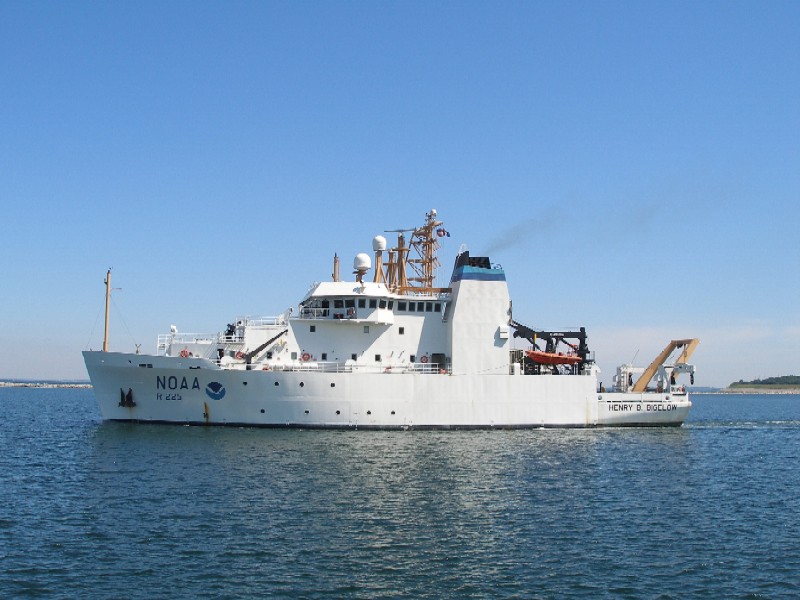
Marine carbon dioxide removal is leaving the whiteboard and entering the harder territory of field trials, sensors and public scrutiny. A new digital report highlighted by the Woods Hole Oceanographic Institution (WHOI) says research activity, technology development, private-sector participation and movement toward testing have all accelerated. Its message is less a green light than a valuation reset: the ocean may offer additional climate tools, but the market for certainty is not yet open.
The report is a 2026 update from the National Academies of Sciences, Engineering, and Medicine. It adds a State of Marine CDR module and refreshes assessments of governance, social dimensions and ocean alkalinity enhancement. The central questions are practical. Can a project remove carbon dioxide at meaningful scale? Can independent observers measure and verify the net removal? What happens to ecosystems over years rather than weeks? And who sets the rules when research crosses jurisdictions?
Adam Subhas, an associate scientist in WHOI’s Marine Chemistry and Geochemistry Department and a member of the standing committee behind the assessment, described the pace of change without disguising the gaps. “The scientific landscape of marine carbon dioxide removal is changing quickly,” Subhas said. “This updated report provides an important opportunity to take stock of what we have learned since 2022, what has become clearer, what remains uncertain, and where additional research is most urgently needed.”
That last clause matters. Marine CDR is not one technology. It includes ocean alkalinity enhancement, direct removal from seawater, seaweed cultivation and sinking, artificial upwelling and other approaches that try to intensify processes the ocean already performs. Each carries a different accounting problem. A chemical signal can be detected, but proving durable atmospheric removal across a moving, layered body of water is a different task. A short-term laboratory result is not the same thing as a climate-scale intervention.
At the same time, the observing system is getting a new layer. NOAA’s Atlantic Oceanographic and Meteorological Laboratory and the Schmidt Ocean Institute have installed an underway partial-pressure-of-carbon-dioxide system on the research vessel Falkor (too), according to a report on the new partnership and NOAA’s Ocean Carbon Cycle Group. The instrument will measure the difference between atmospheric and surface-ocean carbon dioxide while the vessel moves through the South Atlantic, with data sent in near real time and quality-controlled before entering the Surface Ocean CO2 Atlas.
“Ships of opportunity, whether they be research vessels, cruise ships, or merchant vessels, perform an essential service to science by providing a platform where high-quality scientific measurements can be made,” said Denis Pierrot, principal investigator with NOAA AOML’s Ocean Carbon Cycle Group. The point is bigger than one vessel. A moving fleet can help close the gaps that make basin-scale carbon estimates volatile, while giving regulators a clearer baseline against which future interventions can be judged.
For investors and policymakers, that suggests a disciplined sequence. Fund monitoring before scale. Make data and methods portable across projects. Treat community consent and ecological safeguards as operating costs, not public-relations extras. The WHOI-linked assessment says marine CDR could supplement emissions cuts only if it proves feasible and responsible; it also stresses that political decisions, public acceptance and local conditions will shape whether any approach earns permission to grow.
OceanVines’ mission is to illuminate the inner sparks of every life we touch through our efforts in ocean conservation and education. In that spirit, the useful story is not that the ocean has been turned into a carbon machine. It is that better observations can make ambition answerable: fewer slogans, stronger baselines and a public record of what works, what fails and what must wait.
Marine carbon removal may become part of a serious climate portfolio. It has not earned a blank cheque. Together, we celebrate The Greatest Good