Pacific Coral Survey Turns Reef Monitoring Into a Long-Term Asset
September 16, 2026 · By John Ian Lau
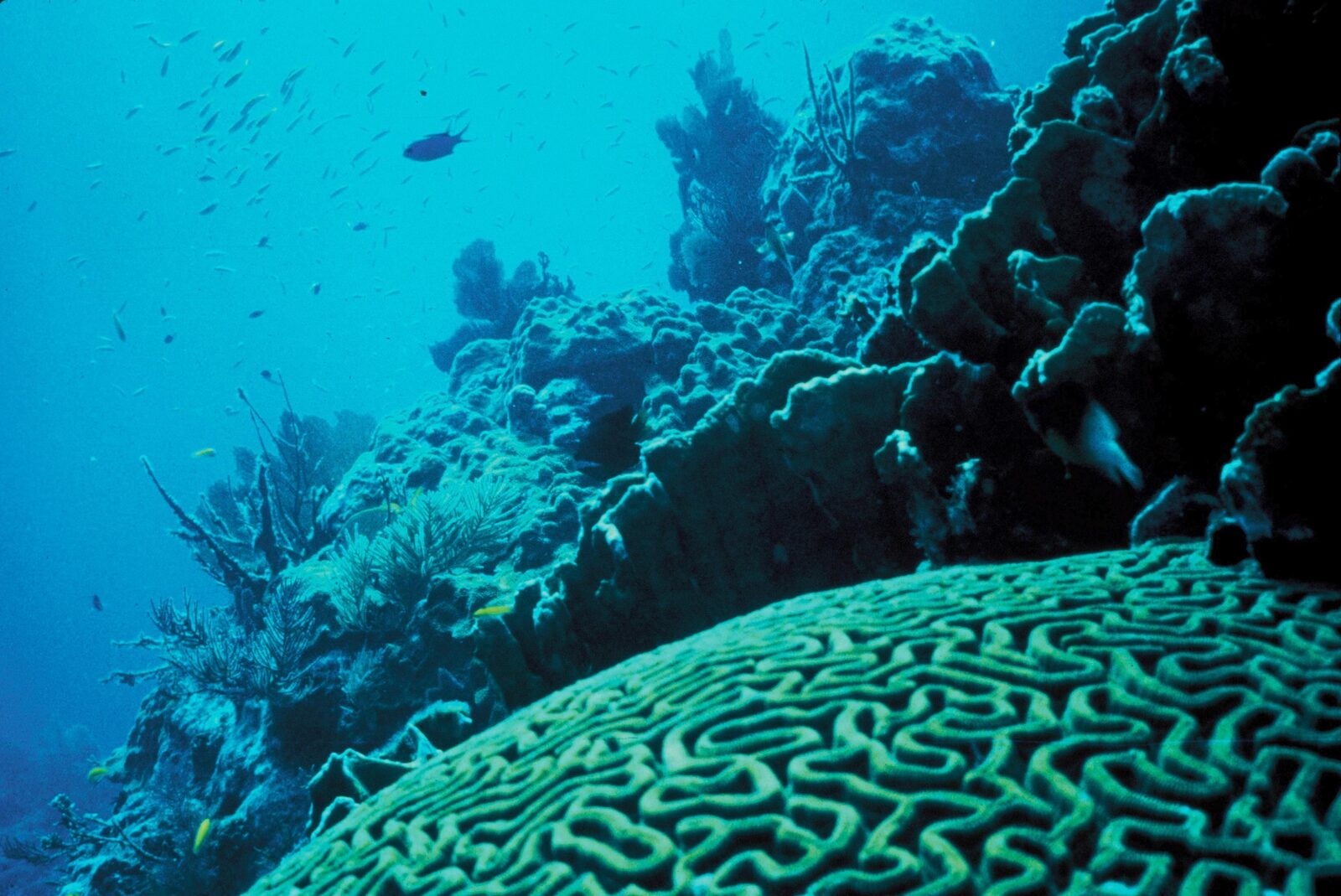
For reef managers, the most valuable thing in the Pacific is not a single spectacular coral. It is a repeatable record. NOAA’s National Coral Reef Monitoring Program has just completed a wide-ranging expedition across American Samoa and the Pacific Islands Heritage Marine National Monument, returning with a dense new layer of evidence on reefs that sit thousands of kilometres from Honolulu.
The mission, completed in September, moved through Jarvis Island, Palmyra Atoll, Kingman Reef, Howland and Baker islands, and seven sites around American Samoa. The NOAA account records 1,006 scuba dives, 440 fish surveys, 420 photomosaic surveys that will become three-dimensional reef models, 550 photoquadrat benthic surveys and 261 water samples. The team also deployed 110 temperature recorders, recovered 108, and conducted 139 night-time tows for juvenile fish.
That inventory matters because reefs are moving targets. Temperature loggers, fish counts, coral photographs and water chemistry are not isolated curiosities; repeated at roughly three-year intervals, they make change legible. NOAA says the data will support sustainable management for human and marine communities, with summary products expected after the team reviews the record. In a world of increasingly uneven observations, a consistent baseline is conservation infrastructure.
The expedition also made the case for connecting science with people. While the ship was in Tutuila, NOAA researchers hosted an outreach event for middle- and high-school students. One hundred and eight students from seven schools received three hours of exposure to survey methods, equipment and larval samples. That is a small audience beside the scale of the Pacific, but it is precisely the kind of encounter that can make a remote monitoring programme locally meaningful.
The stakes are visible in NOAA’s other recent work. In a March report on a colossal Porites coral in the Mariana Islands, Thomas Oliver, Ph.D., a chief scientist of NOAA’s National Coral Reef Monitoring Program, said: “This coral was so big, we actually couldn’t easily measure it due to dive safety restrictions.” Hannah Barkley, Ph.D., another NOAA chief scientist, cautioned against false precision on age: “It is difficult to tell the true age of this coral because it doesn’t produce growth bands like other corals.” The lesson is not that every reef hides a giant. It is that careful measurement begins with humility.
Conservation now needs that humility paired with triage. The Nature Conservancy’s resilience science lead for Global Oceans, Annick Cros, put the opportunity plainly in TNC’s work on heat-resilient corals: “We know there are corals out there that are surviving heat waves and increasingly warmer temperatures. We need to find those resilient corals and protect them before they are lost to other threats, so that reefs have a chance to survive climate change.” Monitoring can help identify where that resilience persists; protection can help ensure it is not overwhelmed by local pressures.
The investment case is therefore straightforward. Better baselines lower the risk of managing blind. Three-dimensional maps and open data can make funding more accountable. Student outreach can turn a distant mission into a shared civic asset. And resilient coral refuges, if found and protected, may give conservation a portfolio of options rather than a single bet on recovery.
Our mission is to illuminate the inner sparks of every life we touch through our efforts in ocean conservation and education. The Pacific survey shows what that looks like in practice: evidence collected carefully, knowledge shared generously and hope treated as something to be earned. Together, we celebrate The Greatest Good